C5 Spinal Cord Injury — My Story & Biology
What a C5 injury means, the surgery I had, and life with quadriplegia.
What “C5” Means
The cervical spine has seven levels (C1–C7). A C5 injury means the spinal cord was damaged around the fifth cervical vertebra in the neck. This level controls shoulder movement and elbow bending; hands and core muscles are usually more affected.
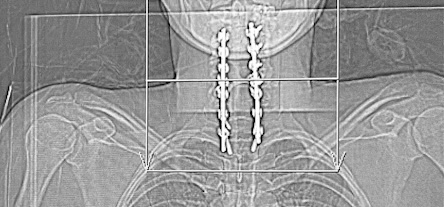
My Surgery: Posterior Cervical Laminectomy & Fusion (C3–T3)
After my crash, the goal was to decompress the spinal cord and stabilize my neck. Surgeons performed a posterior laminectomy—removing the lamina, the bony roof over the spinal canal—to give the cord more room. Then they stabilized my spine with rods and screws in a fusion from C3 down to T3. Fusion means those vertebrae are now joined so they no longer move, protecting the cord while it heals.
Quadriplegia: Living with a Cervical SCI
Quadriplegia (tetraplegia) means the injury affects all four limbs and the trunk. At C5, I deal with limited hand function and core strength, but I’ve built independence with rehab, adaptive tools, and smart routines.
- Autonomic dysreflexia: a serious BP spike from hidden triggers (bladder/bowel issues, tight clothing).
- Orthostatic hypotension: low BP when I sit up; compression and fluids help.
- Respiratory care: cough can be weak — airway clearance and therapy matter.
- Skin protection: pressure reliefs, cushions, and daily checks.
- Spasticity & nerve pain: managed with stretching, meds, and pacing.
Women with SCI
While most SCIs occur in men, roughly about one-fifth (~20%) of people living with SCI are women. Sharing experiences like mine helps highlight women’s perspectives and needs in spinal cord injury research and care.